
Rani Lakshmibai
Key Impact
A queen trained in combat since youth who personally led her kingdom's defense in the 1857 rebellion and died fighting on horseback, becoming India's most powerful symbol of armed resistance.
“Main apni Jhansi nahi doongi: I will not surrender my Jhansi.”
- Rani Lakshmibai
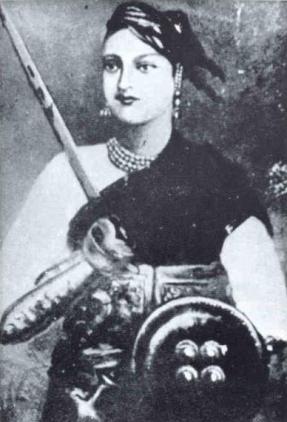
The Vision & Early Struggle
Born Manikarnika in 1828 and married to the Maharaja of Jhansi, Lakshmibai was trained in her youth in horse riding, sword fighting, and self-defense, unusual for a woman of her era, skills that would later define her legend. When her husband died in 1853 without a surviving biological heir, she adopted a son to continue the royal line, following established custom. The British East India Company, under the doctrine of lapse, refused to recognize the adoption and moved to annex Jhansi into British territory, stripping her of her kingdom.
The Betrayal / The Devastating Failure
In 1857, as rebellion spread across northern India, Jhansi became one of its centers. Lakshmibai took command of her kingdom's defense, and when British forces besieged the fort in 1858, she led the resistance personally rather than fleeing to safety. Facing overwhelming force, she escaped the fall of Jhansi on horseback, reportedly with her young son strapped to her back, and continued fighting alongside other rebel leaders. She died in battle near Gwalior in June 1858, sword in hand, fighting until the end rather than surrendering.
The Rise & Eternal Legacy
Even British officers who fought against her, including General Hugh Rose, described her as the most dangerous and admirable of the rebel leaders. She became, and remains, one of the most powerful symbols of resistance in Indian history, particularly as a woman who led armies and died in battle at a time when almost no woman anywhere held that kind of command. Her declaration, "I will not surrender my Jhansi," is still one of the most quoted lines from the entire 1857 rebellion.
Youth Mindset & Civic Responsibility Key Takeaways
Lakshmibai's life challenges any assumption that courage and capability are gendered. She didn't inherit military command, she built it, training for it long before circumstance demanded it of her. For young people, especially young women, her story is a reminder that preparation done quietly, long before anyone asks you to lead, is what makes real leadership possible when the moment actually arrives.
More from Freedom Fighters


Written from well-documented historical record. History involves real complexity and, in some cases, ongoing scholarly debate: this is a starting point for inspiration, not a substitute for deeper reading.